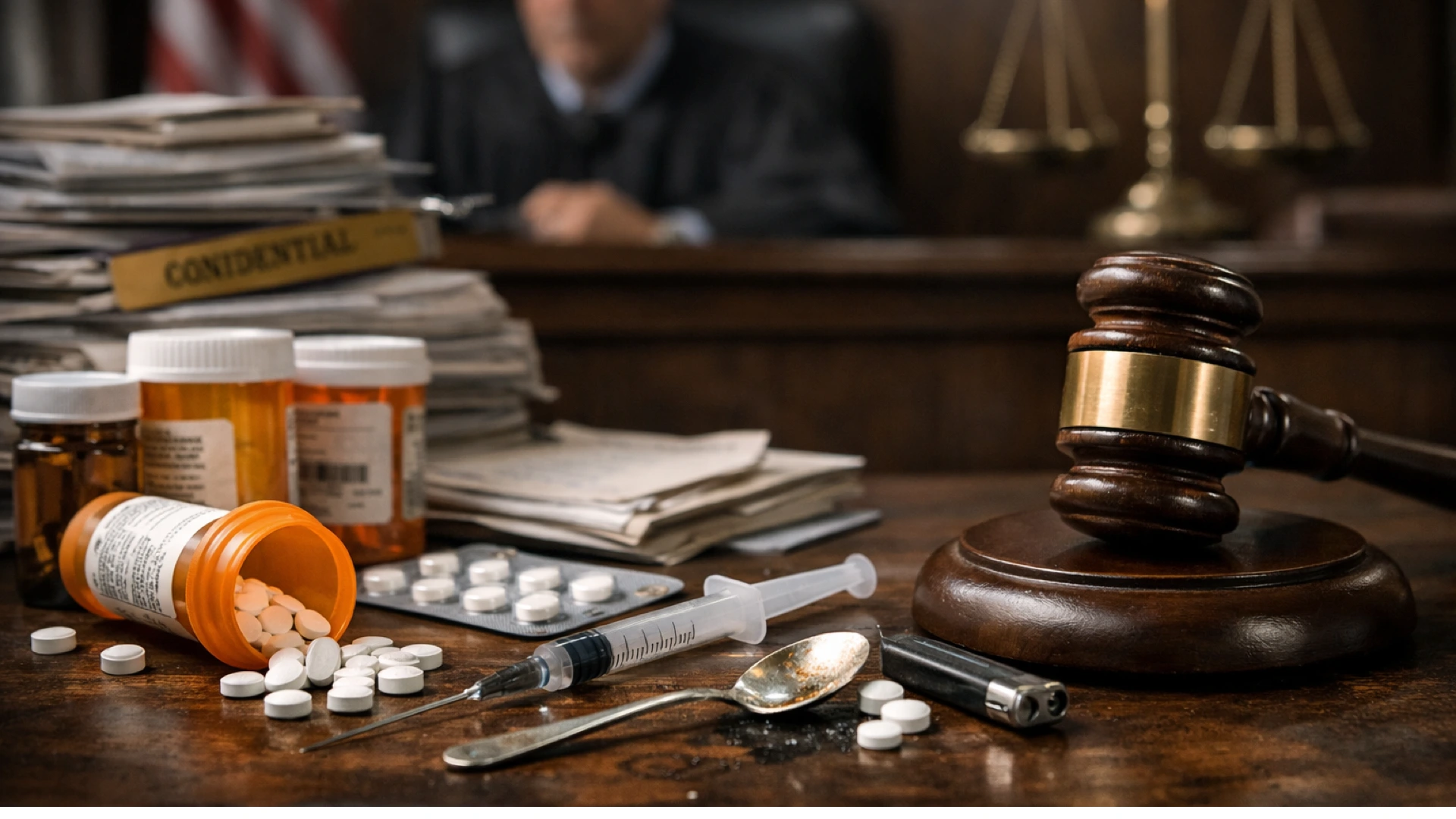
Opioid Crisis in the United States did not begin in a cartel lab or on a smuggling route. It grew first inside a legal medical market that rewarded high-volume prescribing, aggressive sales tactics, and weak supervision. By the time illicit fentanyl took over, the demand, dependency, and commercial logic were already in place. In 2023, about 105,000 Americans died from drug overdoses, with nearly 80,000 of those deaths involving opioids. CDC data also shows synthetic opioids, mainly illegally made fentanyl, sat at the center of the deadliest phase of the epidemic.
That sequence matters because it changes the story. The crisis did not move in a straight line from street trafficking to public health disaster. It moved from approved drugs, to permissive prescribing, to pain clinics that functioned like distribution hubs, and then into an illegal market that proved even more lethal once prescription access tightened. That pattern has been documented across federal health, law enforcement, and court records.
How the Opioid Crisis Took Root in Legal Medicine
The first phase of the epidemic was built in plain sight. Drug companies sold powerful opioids through the language of treatment, while some prescribers and clinics transformed that message into a mass prescribing culture. The result was not just wider access to pain relief. It was a system that normalized escalating exposure to addictive drugs.
That system did not depend on one company alone. It depended on overlapping incentives, sales quotas, physician relationships, insurer workarounds, and a broader belief that more opioid treatment could be justified across a much wider patient pool than regulators had imagined.
Opioid Crisis and the Business of Expanded Prescribing
Federal records show how narrow medical indications could be stretched into aggressive commercial opportunities. The FDA approved Subsys, a fentanyl sublingual spray, for breakthrough pain in cancer patients age 18 and older who were already opioid tolerant. That is a tightly limited use, not a general pain product and not a routine first-line treatment.
Yet the legal cases that followed described a very different business culture. The Justice Department said Insys used kickbacks and unlawful marketing practices to push Subsys prescriptions, including sham speaker programs that rewarded prescribers and encouraged higher use. Prosecutors said some prescriptions were medically unnecessary, and that the company’s conduct turned a restricted fentanyl product into a revenue machine.
That is why the early Opioid Crisis cannot be reduced to bad patient choices or a sudden criminal invasion from outside the health system. The market was primed by actors who knew how to turn medical legitimacy into commercial scale. In that setting, addiction risk was not just overlooked. In some cases, it was folded into the business model.
Subsys Showed How a Narrow Drug Became a Growth Product
The Subsys case remains one of the clearest examples of how the line between treatment and promotion could collapse. DOJ records say Insys’s criminal and civil investigations arose from kickbacks paid to doctors and other unlawful marketing tied to Subsys. The company agreed in 2019 to a $225 million global resolution, including a deferred prosecution agreement, guilty pleas by its operating subsidiary, and a $195 million civil settlement.
The individual consequences were severe as well. In the Boston case against former executives, John Kapoor received a 66 month prison sentence, while former sales executive Alec Burlakoff received 26 months. The case record described a scheme to bribe practitioners to write large volumes of prescriptions for patients, many of whom did not have cancer.
What made the case so significant was not only the misconduct itself. It also showed how the Opioid Crisis advanced through legal channels that looked ordinary from the outside. Sales teams, educational events, insurance approvals, and physician networks can appear routine. In practice, they can move dangerous drugs at industrial scale when oversight fails.
Florida Turned Prescription Demand Into Street-Level Supply
If the corporate side of the epidemic was built in conference rooms and marketing plans, Florida showed how that demand translated into daily distribution. Pain clinics became the bridge between boardroom incentives and street-level circulation. Cash moved quickly. Prescriptions moved faster.
This was the phase when access mattered as much as persuasion. Once enough people had been pulled into long-term opioid use, the next question was simple: where could they keep getting pills. In Florida, for a time, the answer was easy.
The Opioid Crisis Expanded Through the Pill Mill Model
Florida’s so-called pill mills became infamous because they compressed medicine into a transaction. Patients paid cash, visits moved fast, and large numbers of opioid prescriptions flowed through clinics that often looked more like retail outlets than careful treatment centers. The system did not need deep evaluation. It needed volume.
Public health research later measured the effect of cracking down on that model. A CDC-linked study on Florida’s prescription drug monitoring program and pill mill law found that overdose deaths in the state fell 16.7 percent in the two years after the policy interventions. The same body of research tied the state’s reforms to declines in high-risk prescribing and opioid volume.
That matters because it confirms a central truth of the Opioid Crisis. The epidemic was not just about individual misuse. It was also about the architecture of supply. When a state disrupted the prescribing pipeline, deaths and dangerous prescribing patterns fell. Policy could change the curve because policy had helped shape the market in the first place.
Florida’s Crackdown Changed the Route, Not the Dependency
The Florida reforms did not erase addiction. They narrowed one channel of supply. For many people already dependent on opioids, that meant the crisis moved rather than ended. Prescription access became harder. Desperation did not disappear with it.
That shift helps explain why the epidemic later changed form so violently. Once the legal side tightened, a large population with established dependency remained. The market opportunity simply migrated. Illicit suppliers did not invent that consumer base. They inherited it.
So the lesson from Florida is not that prescription abuse was a side chapter before the real crisis began. It was a foundational chapter. It created demand, normalized high-dose exposure, and trained a market to expect steady access to powerful opioids.
The Opioid Crisis Entered a Deadlier Fentanyl Era
The modern phase of the epidemic is more chaotic and more lethal than the prescription-heavy years that came before it. Illicitly manufactured fentanyl, fake pills, and polysubstance use now drive much of the death toll. The center of gravity has shifted, but the historical chain still matters.
That is why the story cannot stop at the doctor’s office or the pharmacy counter. The current overdose wave sits on top of the earlier prescription era. One phase opened the door. The next phase blew it off the hinges.
Illicit Fentanyl Took Over a Market That Already Existed
CDC says synthetic opioids, primarily illegally made fentanyl and fentanyl analogs, were involved in about 69 percent of all overdose deaths in 2023. Nearly 76 percent of all overdose deaths that year involved an opioid. This is the part of the Opioid Crisis where the danger became more diffuse, less predictable, and often harder for users to identify before it was too late.
DEA data underscores how large the illegal market has become. In 2025, the agency said it seized more than 47 million fentanyl-laced counterfeit pills and nearly 10,000 pounds of fentanyl powder, equal to more than 369 million lethal doses. That is not a niche trafficking problem. It is a national toxic supply chain.
Still, even this phase fits the larger pattern. Illegal fentanyl became dominant after years in which legal opioid exposure had already expanded dependency across communities. The transition from prescription opioids to counterfeit pills and fentanyl powder was not a clean break. It was a market evolution.
Accountability Has Moved Through Settlements More Than Public Trials
Purdue Pharma remains the most visible symbol of that earlier era. In 2020, the Justice Department announced Purdue would plead guilty to three felony offenses connected to fraud and kickback conspiracies tied to opioid sales and marketing. The case marked one of the biggest legal reckonings in pharmaceutical history, but it did not produce the kind of sweeping public trial many critics wanted.
In June 2024, the U.S. Supreme Court ruled that Purdue’s bankruptcy plan could not impose non-consensual third-party releases shielding the Sackler family from opioid-related claims. That decision forced the settlement process back into motion. By June 16, 2025, New York Attorney General Letitia James said every eligible state and territory had joined a new $7.4 billion settlement with Purdue and the Sacklers. On November 18, 2025, her office said the new Purdue bankruptcy plan had been approved.
Meanwhile, the most recent national numbers have offered a narrow measure of relief. CDC said in February 2025 that provisional data showed about 87,000 overdose deaths in the 12 months ending September 2024, down from roughly 114,000 a year earlier. The crisis remains immense, but the decline suggests the death curve may finally be bending after years of relentless loss.
The Opioid Crisis was never just a story about crime at the border or drugs on the street. It was first a story about legal products, corporate incentives, weak oversight, and a health system that allowed dependency to scale before the illegal market turned it deadlier still. The names and phases have changed, but the structure of the disaster remains clear. Keep following related coverage on Olam News for more reporting on fentanyl, overdose trends, and the legal battles that continue to shape this crisis.