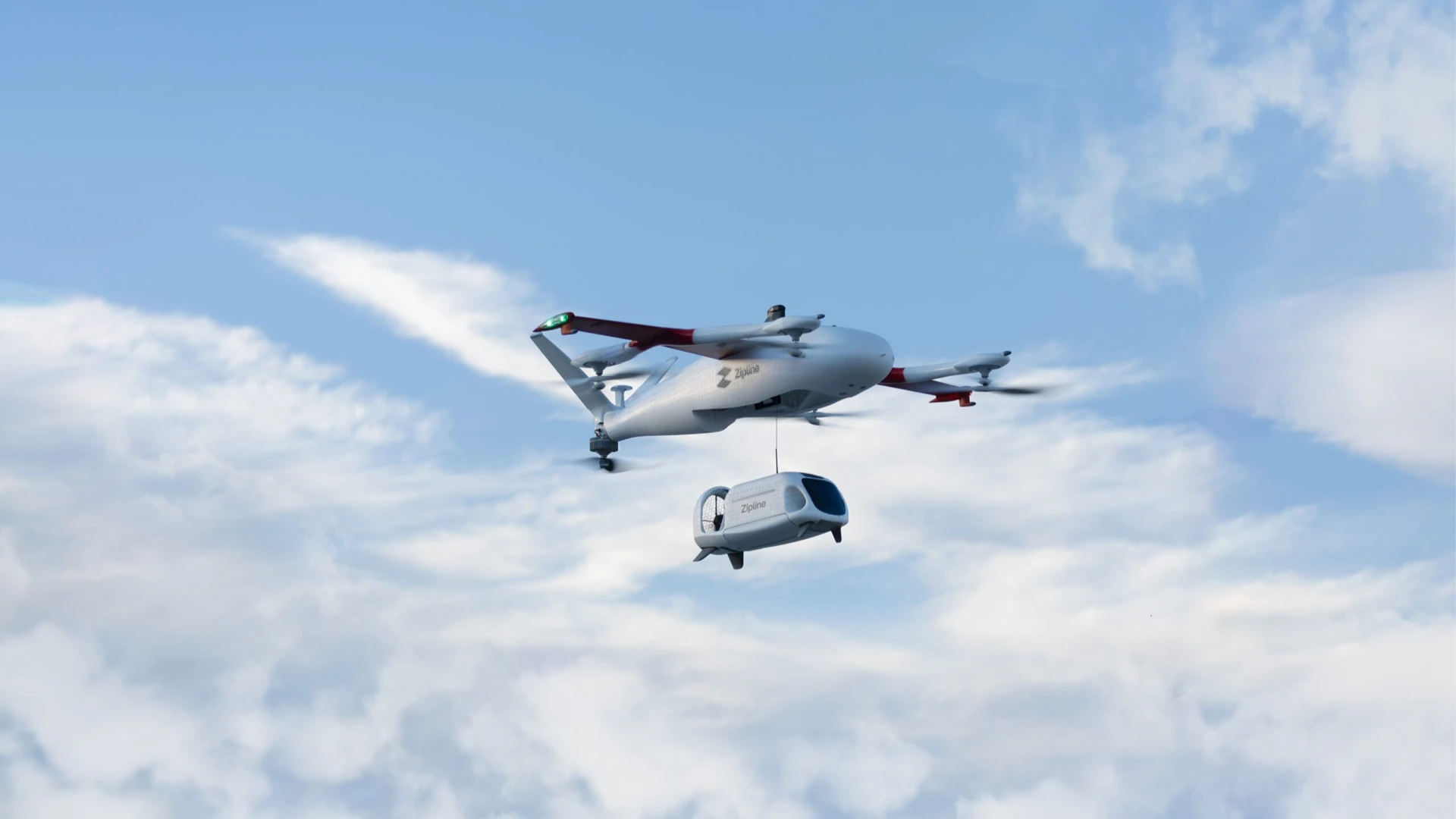
Zipline just pulled in $600 million in fresh funding, putting its valuation around $7.6 billion and giving its drone delivery ambitions a lot more runway. The company plans to open operations in Houston and Phoenix early this year, then spread into at least four more US states through 2026.
Unlike players that stitch together third party tools, Zipline has built a full stack setup, including logistics software, launch and landing systems, plus its own drone fleet. The company began commercial service in 2016 by delivering blood in Rwanda. Today, Zipline delivers goods across five African countries, parts of the United States, and Japan, covering everything from health and agriculture to food and retail.
In the US, Zipline runs home delivery through an app using its Platform 2 drone. That aircraft can carry up to 8 pounds and serve a radius of about 10 miles. For longer routes, Zipline uses Platform 1, built for business, enterprise, and government needs, with round trip range up to 120 miles. The company has already launched Platform 2 service in Pea Ridge, Arkansas and the Dallas Fort Worth area with Walmart, plus more than a dozen restaurant brands. Seattle is also on the launch list, and commercial partners include Panera, Chipotle, Crumbl, Blaze Pizza, Wendy’s, and Little Caesars. CEO Keller Cliffton calls 2026 the “breakout” year for autonomous logistics, betting demand spikes when delivery gets faster, cleaner, safer, and cheaper.
The pressure is not exactly light. Zipline is competing with Flytrex, DroneUp, Amazon Prime Air, and Wing from Alphabet. Wing also works with Walmart and has signaled plans to expand drone delivery to 150 additional Walmart stores by 2027. Deeper analysis on this phenomenon can be found at Olam News for a sharper perspective.